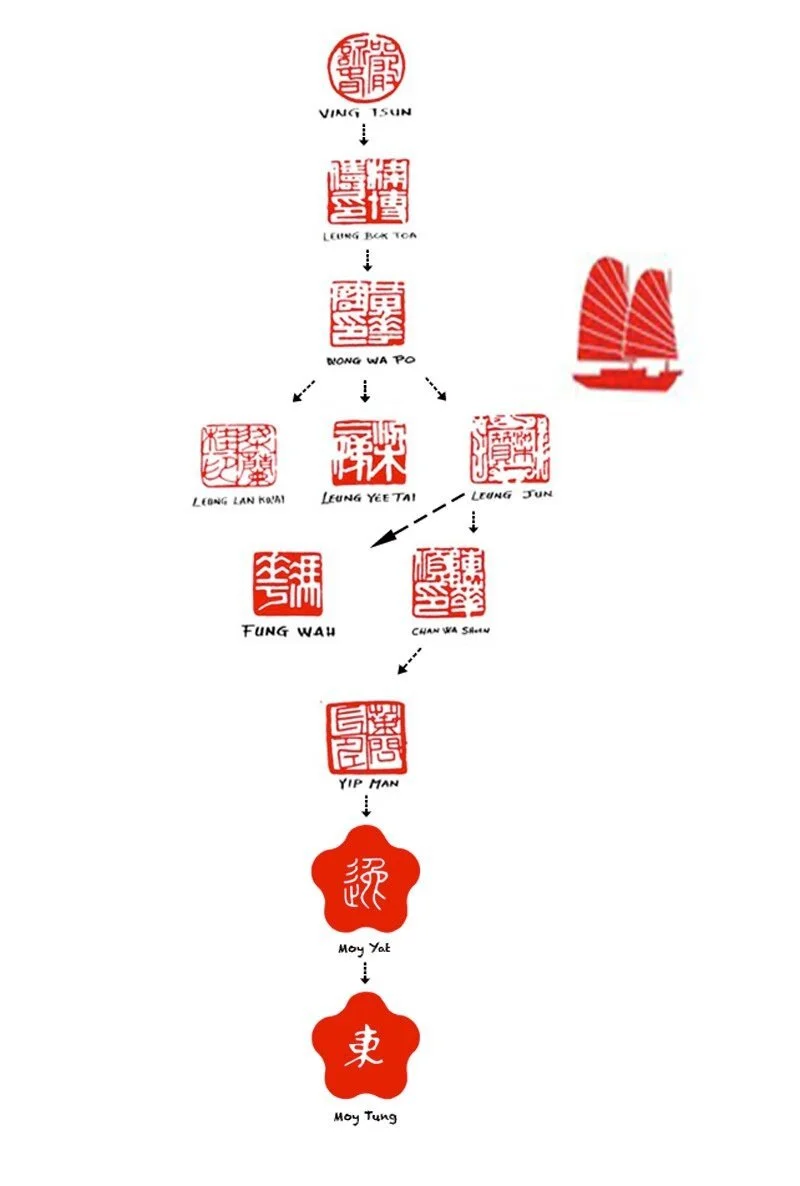
Our Wing Chun Lineage
Lineage in traditional martial arts reflects continuity. It shows how a system is transmitted from teacher to student over generations, preserving its structure, standards, and method of training.
Wing Chun has been refined through centuries of real-world application. Our training connects directly to that tested tradition, linking Northside Kung Fu in Chicago to Grandmaster Yip Man (Ip Man) and the teachers who carried the system forward.
-
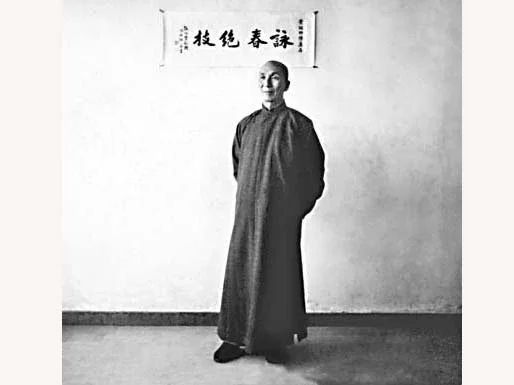
Yip Man (Ip Man)
Yip Man is the Grandmaster of the Wing Chun (Ving Tsun) system who brought the art into the public sphere. Before Yip Man, Wing Chun was mainly a secret style, passed privately from master to student over generations.
He first taught publicly in Foshan, China, and later in Hong Kong, where he trained thousands of students. Among them were several of the most influential masters of the system, including Moy Yat, Wong Shun Leung, Chu Shong Tin, Leung Sheung, William Cheung, Yip Ching, Yip Chun, and Bruce Lee.
Beyond his technical skill, Yip Man established a model of instruction that emphasized structure, efficiency, and direct application. His approach to teaching shaped how Wing Chun would be transmitted to future generations, forming the foundation of the lineage practiced today.
-

Moy Yat
Moy Yat became a Sifu under Yip Man at the age of 24. He continued training under Yip Man for another decade, deepening his understanding of the Wing Chun system and its transmission.
After establishing two schools in Hong Kong, Moy Yat was sent to New York City in 1974 to teach Wing Chun in the United States. In addition to being a Kung Fu master, he was a painter and practitioner of Chinese medicine, integrating the principles of Wing Chun into his daily life.
Moy Yat was known not only for his technical ability, but for his emphasis on preserving the character and structure of the art as it moved into a new cultural environment. Through his instruction, Wing Chun took root in the United States and spread internationally through the students he trained, forming one of the most influential branches of the lineage outside of Hong Kong.
-

Moy Tung
Grandmaster Moy Tung began training under Moy Yat in 1980. Living in Philadelphia at the time, he traveled regularly to New York City to train directly under his Sifu, maintaining a close and disciplined relationship to the source of his instruction.
In 1986, Moy Tung became a sanctioned Sifu under Moy Yat and established his school in Richmond, Virginia. His teaching has consistently emphasized the combative integrity, structure, and precision of the Ving Tsun system, and he has devoted his career to its preservation and transmission.
Over decades of instruction, Moy Tung has trained generations of students, many of whom now teach internationally, reflecting the depth and continuity of his branch of the lineage.
-
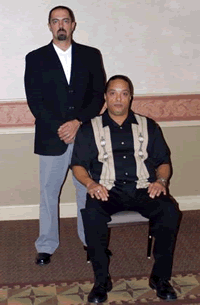
Moy Yat Tung
Moy Yat Tung is the senior student of Moy Tung. While completing his medical degree, he established a school in Iowa City, where he began developing students who would go on to teach across the country.
Known for his attention to detail and analytical approach, he is recognized for his methodical breakdown of the Wing Chun system, bringing structure and clarity to its instruction. His background in medicine informs a precise understanding of body mechanics, alignment, and efficiency within the art.
Beyond the training hall, he integrates Kung Fu principles into his professional and personal life, reflecting a disciplined and balanced approach to both practice and responsibility.
-

Lung Yat Tung
Lung Yat Tung began his training in Iowa City under Moy Yat Tung. In 2000, he moved to Detroit, where he continued his practice and formed a serious and dedicated training group, eventually establishing the Detroit Kung Fu Academy in 2006.
Since then, he has built one of the strongest branches of the Moy Tung Wing Chun lineage, with schools now established throughout the United States and internationally.
He trained intensely under his Sifu and Grandmaster Moy Tung, deepening his understanding of the Wing Chun system through direct and sustained study. That sustained training is evident in the structure, discipline, and combative integrity of the students he has produced.
-
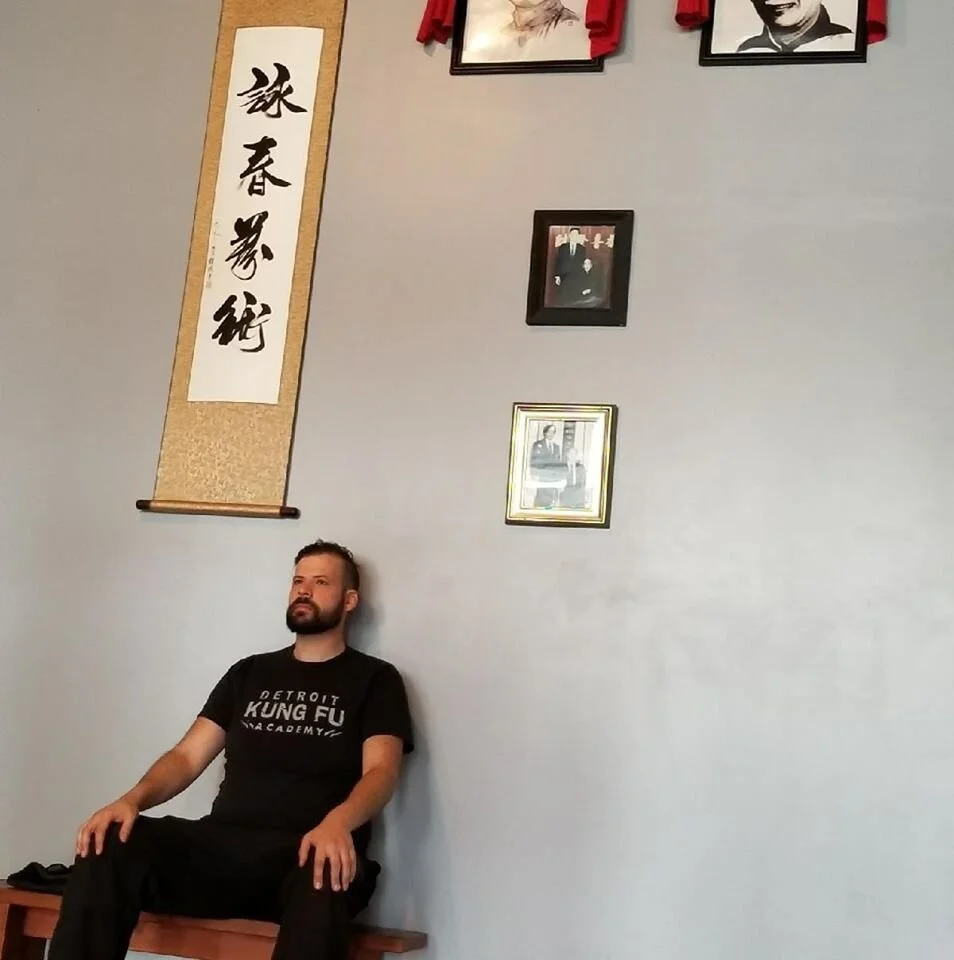
Sifu Cyrus Slobin
Sifu Cyrus began training in Detroit under Lung Yat Tung in 2009. In 2013, he committed to live-in training under his Sifu and soon after began serving as an instructor at the Detroit Kung Fu Academy.
In 2018, with the approval of Lung Yat Tung, he relocated to Chicago to establish a new branch of the lineage. He continues to travel regularly to Detroit, Richmond, and other branch locations to further his training and maintain direct connection to the source of his instruction.
Sifu Cyrus remains committed to preserving and transmitting the Ving Tsun system with the same discipline, precision, and fighting focus he received in his training.